
Next project
Employee forms platform
Team experience · Web app · Freelance
A dashboard that pre-fills employee forms from the database, generates PDFs, collects digital signatures and delivers documents by email or WhatsApp.
Team experienceSaaS · 2024–2026
A multi-tenant product for intake calls: a form engine with recursive decision trees, lead automation, role-based reporting and in-app calling.
Built byAhsan NadeemIntake teams working for many client companies needed to take calls, follow scripts that change with every answer and turn each completed call into a lead, on one platform, without a developer rebuilding forms whenever a script changed.
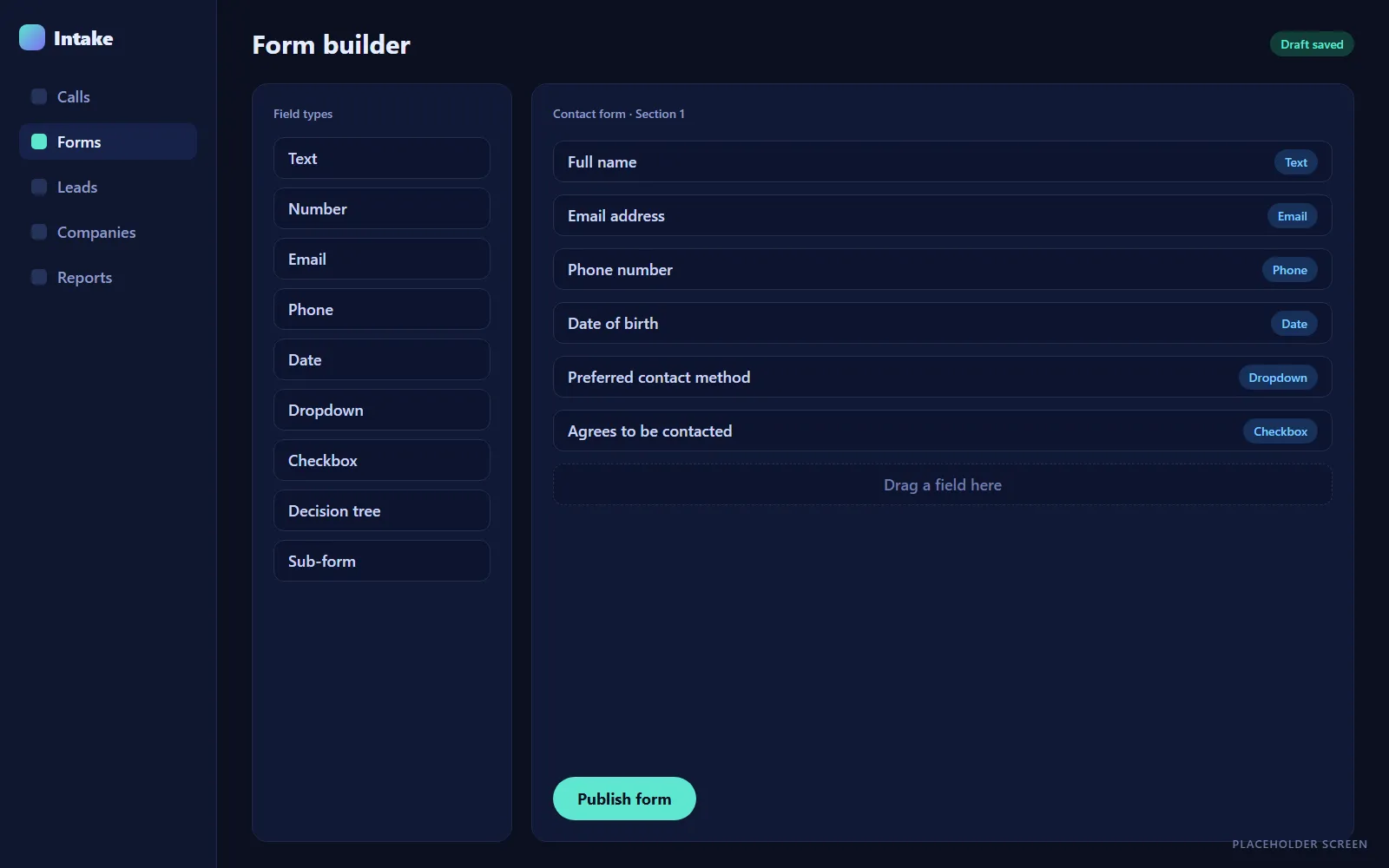
Ahsan was the primary and solo developer across a NestJS backend and a SolidJS frontend. At the core is a configurable form engine: administrators compose forms from nested sections, grouped and dynamic fields and sub-forms, and decision-tree fields branch the script on each answer. Around it he built multi-tenant company management, lead automation, role-based reporting, layered sign-in security and calling over FusionPBX.
One multi-tenant platform runs intake from the first ring to a delivered lead. The form engine became a shared TypeScript SDK, published through Azure Artifacts and reused by a second product, the legal practice platform, which also receives leads from this one.
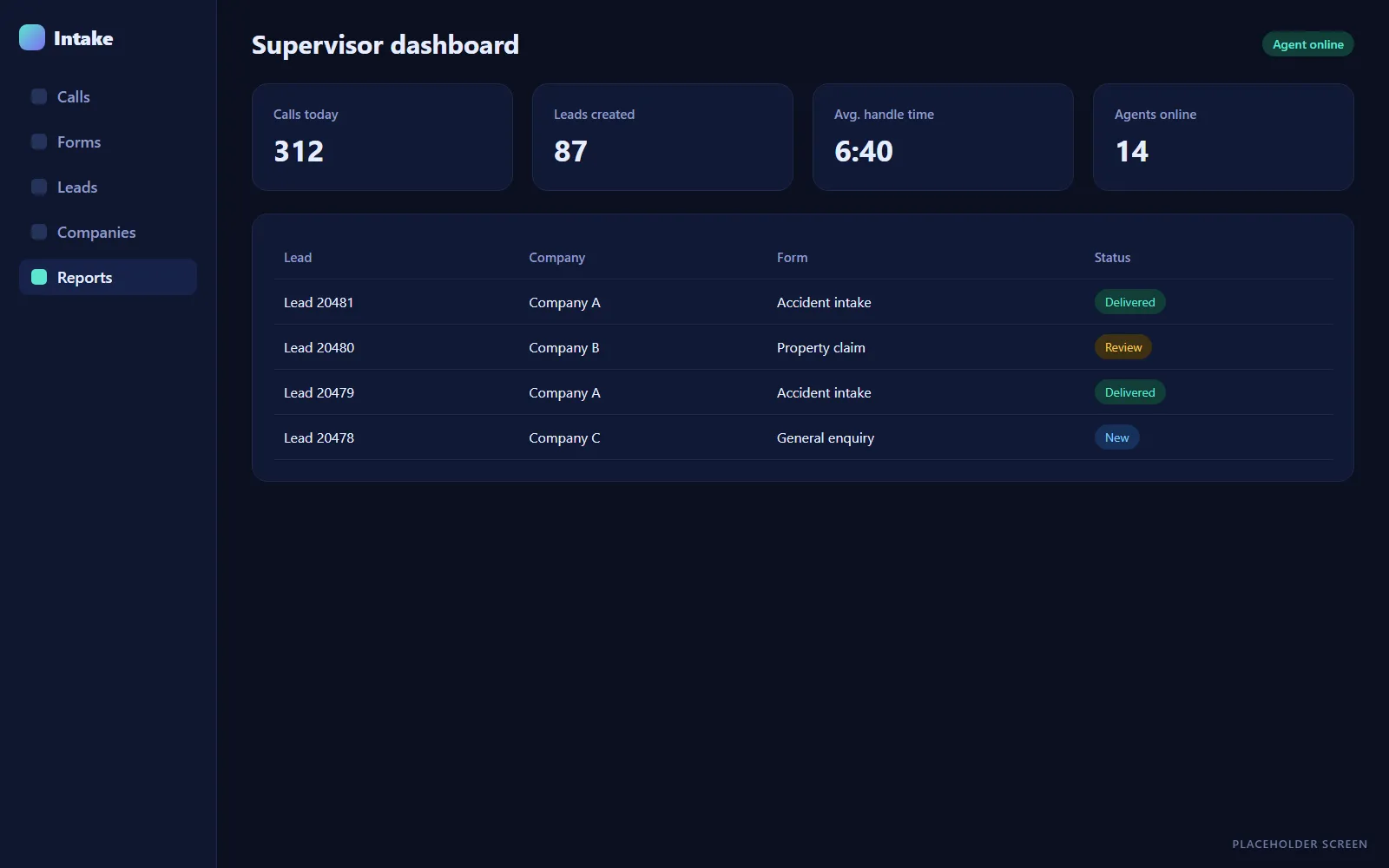
A look at the screens. Drag the front one aside or use the arrows to flip through.
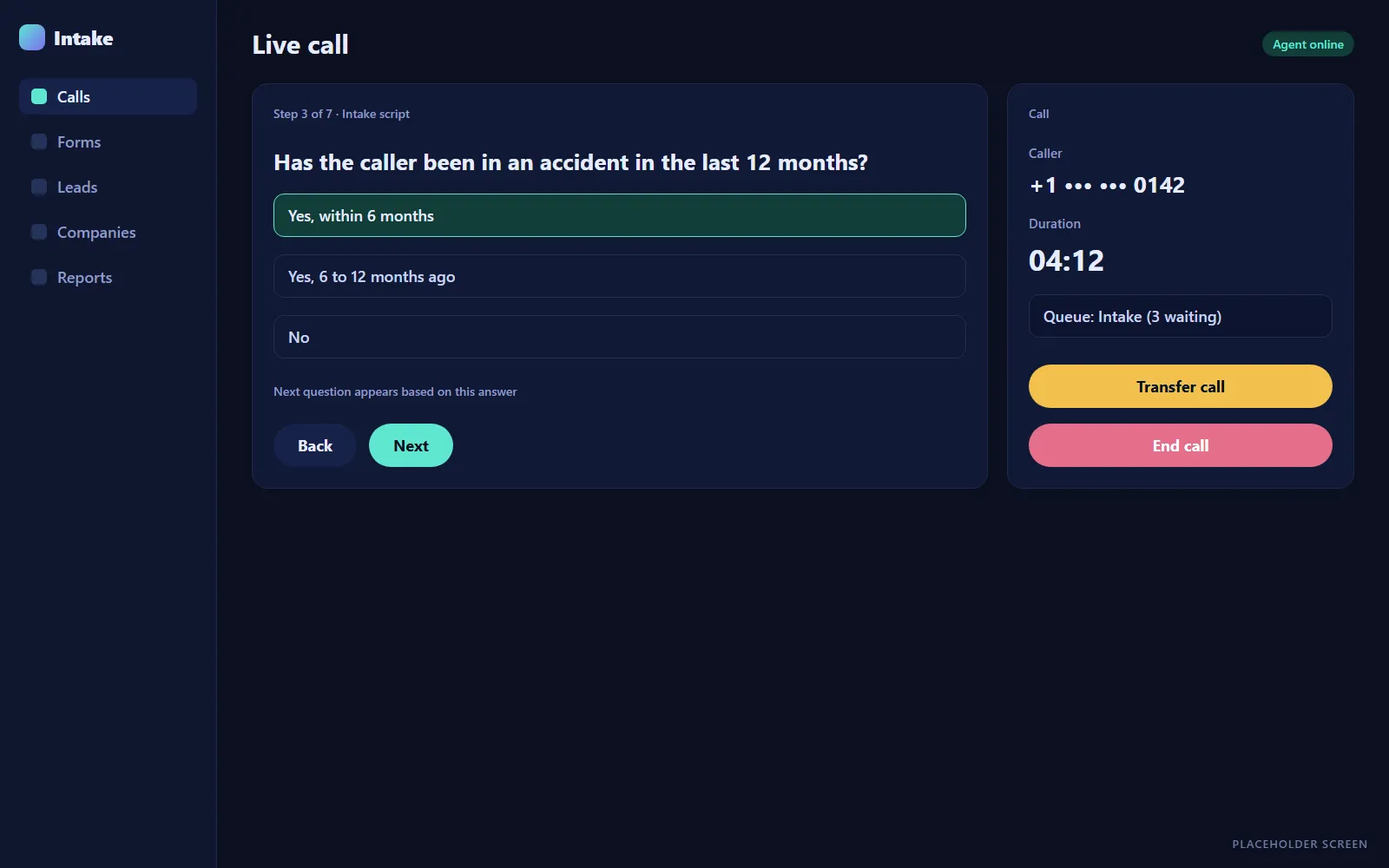
Live call (1 / 3)
From what people see down to what it runs on, with the stack behind each layer.
The capabilities that went live, one card each.
Nested structures, grouped and dynamic fields, sub-forms, and scrolling or step-by-step modes, so a new script is configuration, not a release.
Multi-level branching driven by each answer: operators see only the questions that apply to the caller in front of them.
Forms, contacts, supervisors and leads belong to their organisation, so many client companies share one platform.
Completed forms become leads automatically, and configured delivery groups get an email the moment one lands.
Extension calling, call handling and queues through FusionPBX and SIP.js, next to the script and user, transfer-call, instructional and label fields.
Email and SMS sign-in, TOTP two-factor and Google and Microsoft OAuth, with role-based dashboards for operators, supervisors and administrators.
The engineering calls behind the build, and why they were made.
Form definitions are generated and validated as JSON by a TypeScript SDK, so scripts change without a deployment and every form is checked before an operator sees it.
The form SDK is published through Azure Artifacts. A second product consumes the same package, so new field types and fixes reach both.
Every form, contact, supervisor and lead is linked to its organisation, which keeps each company's records apart and makes per-company reporting natural.
Telephony runs inside the same screens as the forms, so operators handle the call and the script together instead of switching tools.
Next project
Team experience · Web app · Freelance
A dashboard that pre-fills employee forms from the database, generates PDFs, collects digital signatures and delivers documents by email or WhatsApp.
That's the kind we like. Tell us about it and we'll reply with how we'd approach it.
Change theme