
Next project
Call centre & lead management platform
Team experience · SaaS · 2024–2026
A multi-tenant product for intake calls: a form engine with recursive decision trees, lead automation, role-based reporting and in-app calling.
ZNova projectWeb app · Delivered
Billing, stock and staff attendance for Ahad Brothers' two uniform branches, each kept apart behind two-step sign-in, in one React and NestJS application.
Built byAhsan NadeemAhad Brothers sells school uniforms from two branches in Lahore, each run separately. The shop needed one system to bill customers at the counter, keep stock right and see how sales are going.
The branches had to stay apart: each sells its own products under its own codes and keeps its own stock, and neither should see the other's bills or staff. The owners also wanted a simple record of when staff arrive and leave, without buying an attendance machine.
ZNova built a web application with a React and TypeScript front end and a NestJS API on PostgreSQL through Prisma. Every record belongs to a branch, and the API applies the branch from the signed-in user's token to every query, so one branch's products, bills and staff never reach the other's screens. Bill numbers run per branch too.
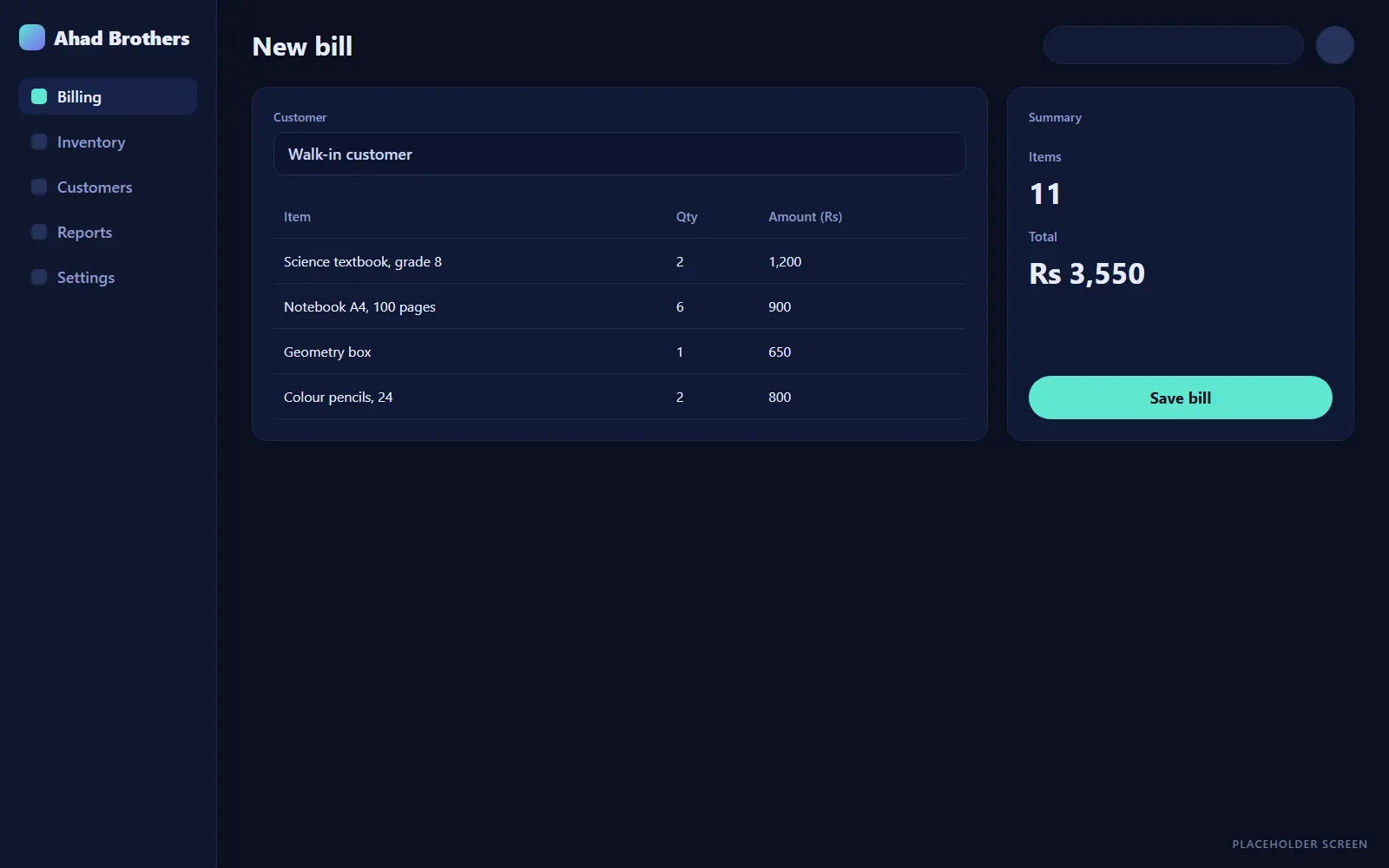
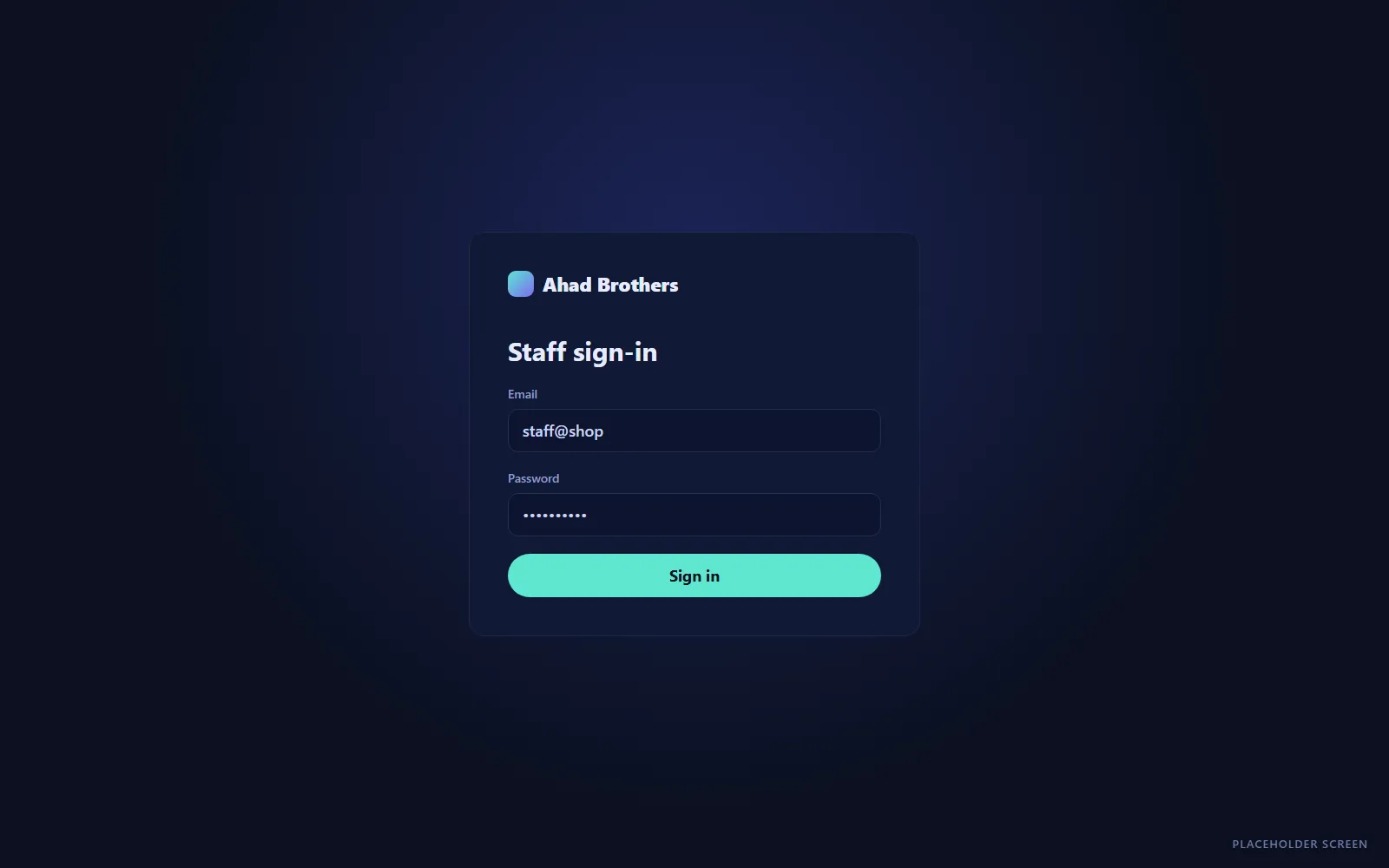
Sign-in takes the branch, a password and a code from an authenticator app; each code works once, and repeated wrong attempts lock the account for a while. At the counter, staff enter product codes, mark returns, hold a bill for later and print a receipt. Each sale takes its items out of stock and each return puts them back.
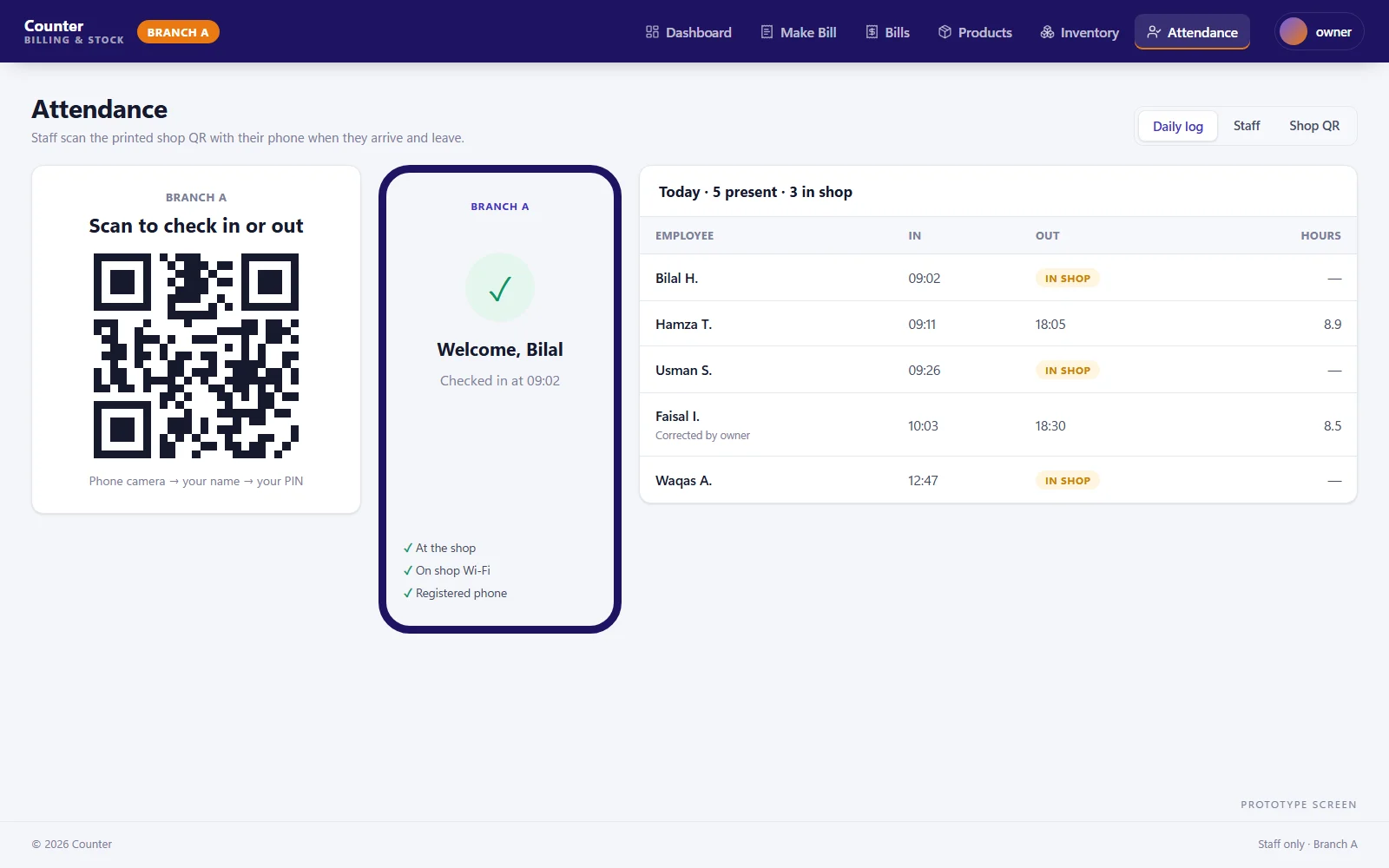
For attendance, staff scan a QR code printed on the shop wall with their own phone and enter a PIN. A scan only counts from inside the shop's radius and on its Wi-Fi, and each employee is tied to the phone they first used, so nobody can mark attendance for someone else. Owners can correct a shift, and the log shows who changed it.
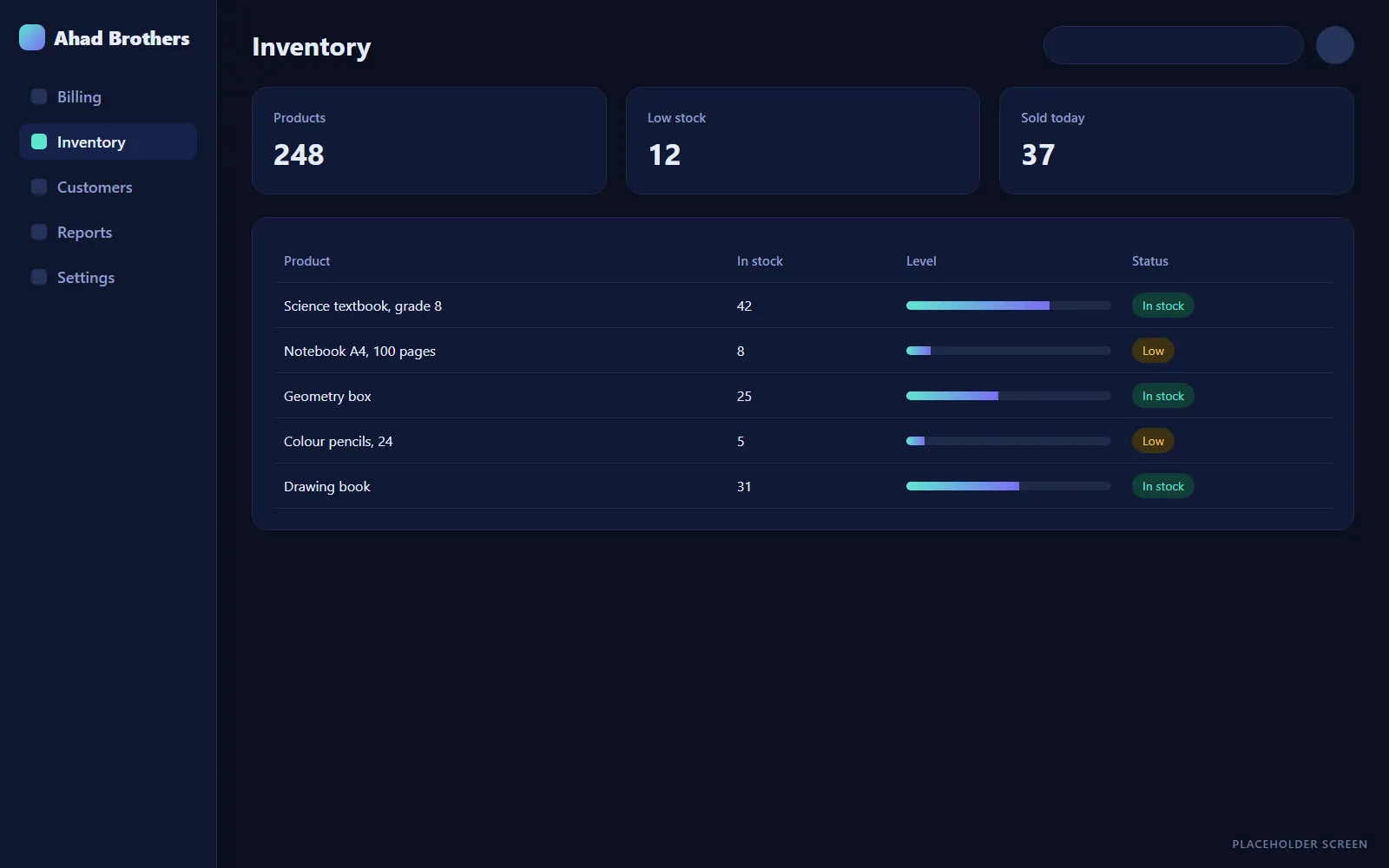
Each branch runs its counter, stock and staff attendance from one application, with its records kept apart from the other branch's. Stock follows every bill, items below their reorder level are flagged, and the dashboard shows revenue and top sellers for the day, week or month.
ZNova has also built Ahad Brothers' online store, so the counter and the website both run on software from the same team.
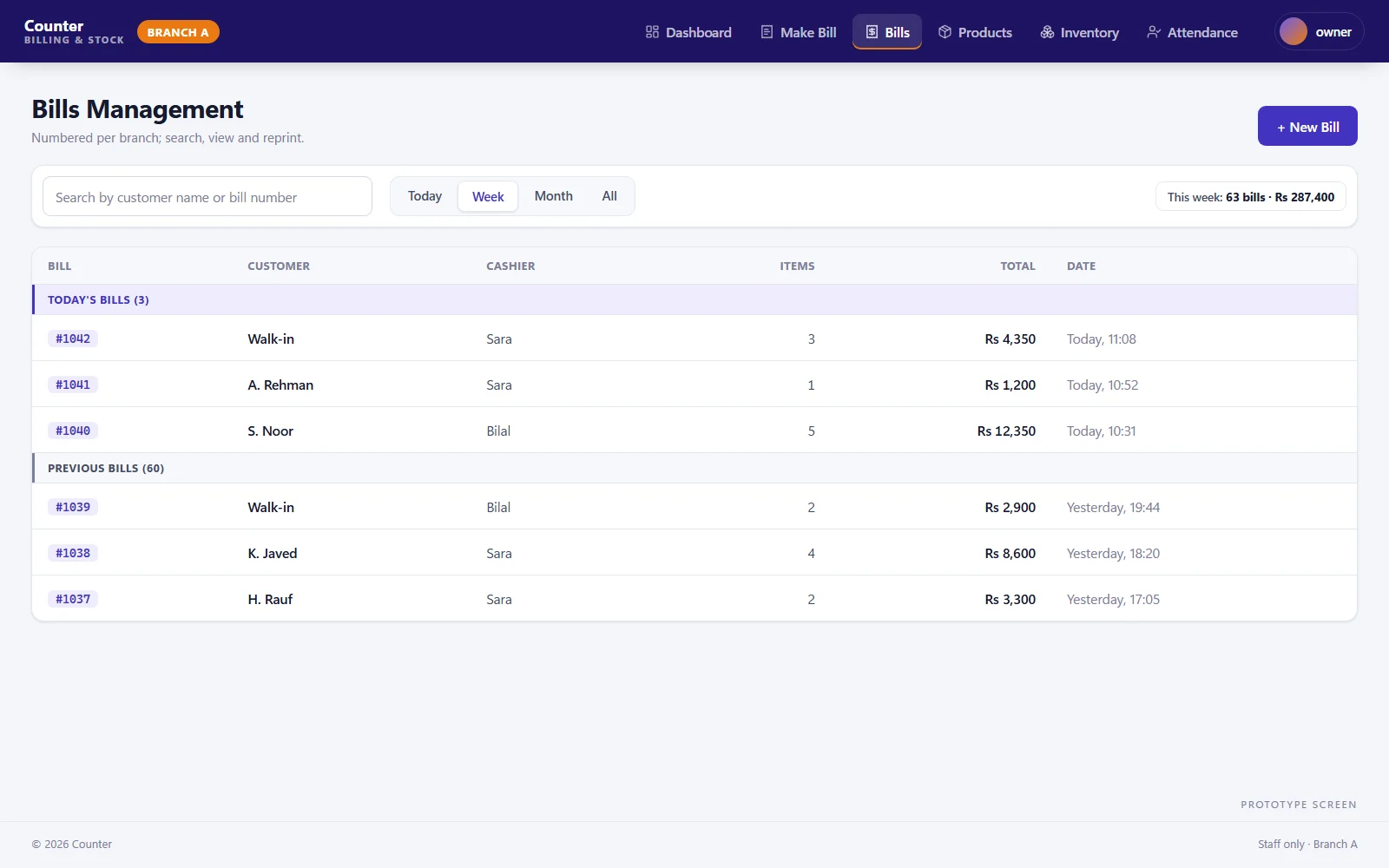
A look at the screens. Drag the front one aside or use the arrows to flip through.
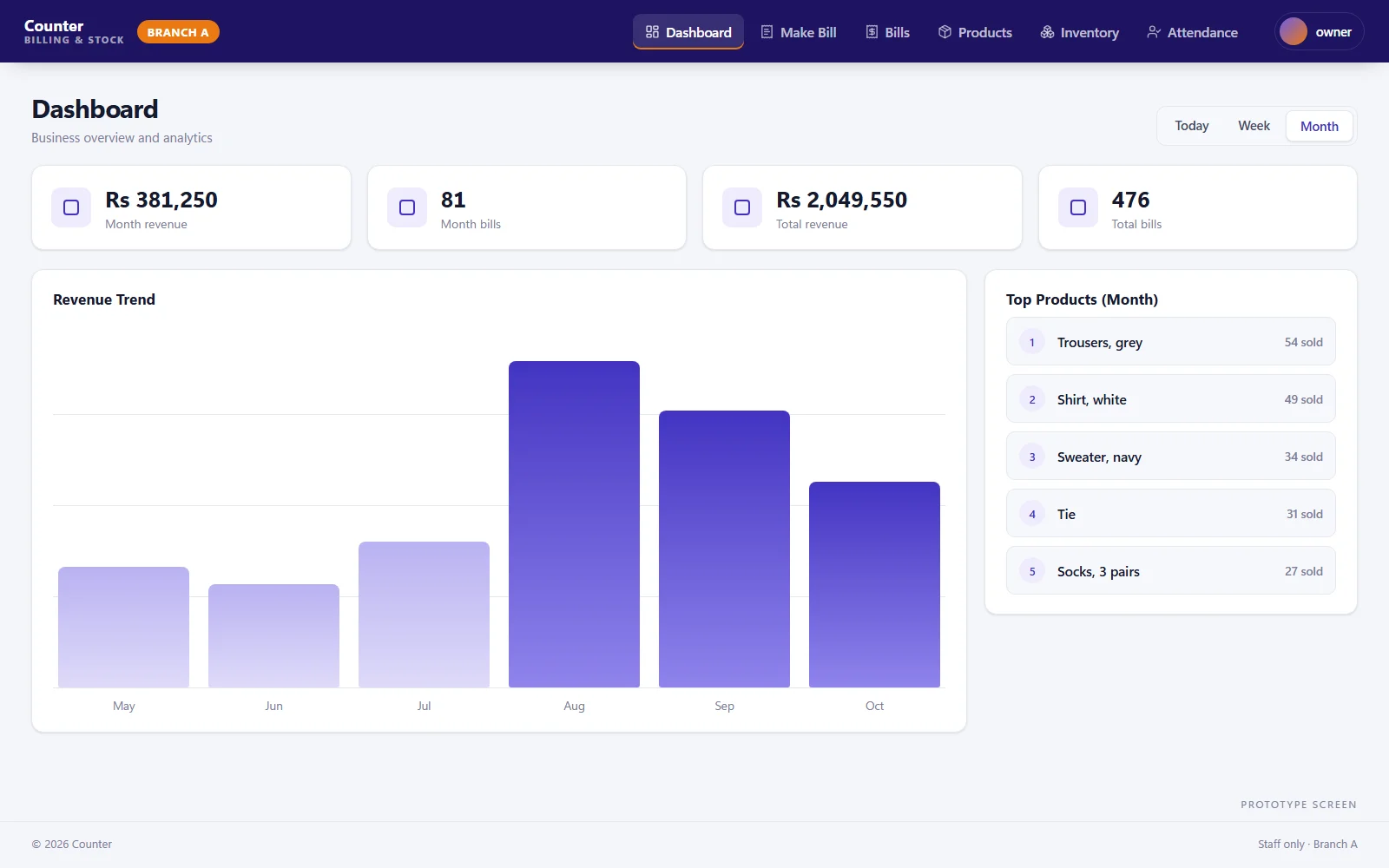
Sales dashboard (1 / 6)
From what people see down to what it runs on, with the stack behind each layer.
The capabilities that went live, one card each.
Enter product codes, mark returns, hold up to five bills for later and print a receipt or an A4 copy.
Each bill takes its items out of stock and each return puts them back; low and out-of-stock items are flagged.
Revenue, bill counts, a monthly trend and top sellers for today, this week or this month.
Each branch has its own products, codes, stock, bills and staff, and sees only its own.
Branch, password and an authenticator-app code, with a lockout after repeated wrong attempts.
Staff scan a printed QR with their phone; location, shop Wi-Fi and a registered phone confirm they're at the shop.
The engineering calls behind the build, and why they were made.
The server takes the branch from the signed-in user's token and applies it to every query, so keeping branches apart never depends on a screen getting it right.
A printed QR and the staff's own phones replace attendance hardware. Location, Wi-Fi and phone checks make a photo of the code useless away from the shop.
Prisma generates typed queries from the schema, and TypeScript carries those types through the API to the screens, so a schema change shows up as a compile error, not a wrong bill.
Next project
Team experience · SaaS · 2024–2026
A multi-tenant product for intake calls: a form engine with recursive decision trees, lead automation, role-based reporting and in-app calling.
That's the kind we like. Tell us about it and we'll reply with how we'd approach it.
Change theme